The most effective way to treat a wasp nest is to apply an insecticide dust containing permethrin or bendiocarb directly into the nest entrance at dusk, when most wasps have returned and activity is low. Workers carry the dust into the nest and it spreads through the colony. Most nests are dead within 24 to 48 hours. Do not seal the entrance before or during treatment. Blocking wasps inside forces them to chew through into the living space, which is far more dangerous.
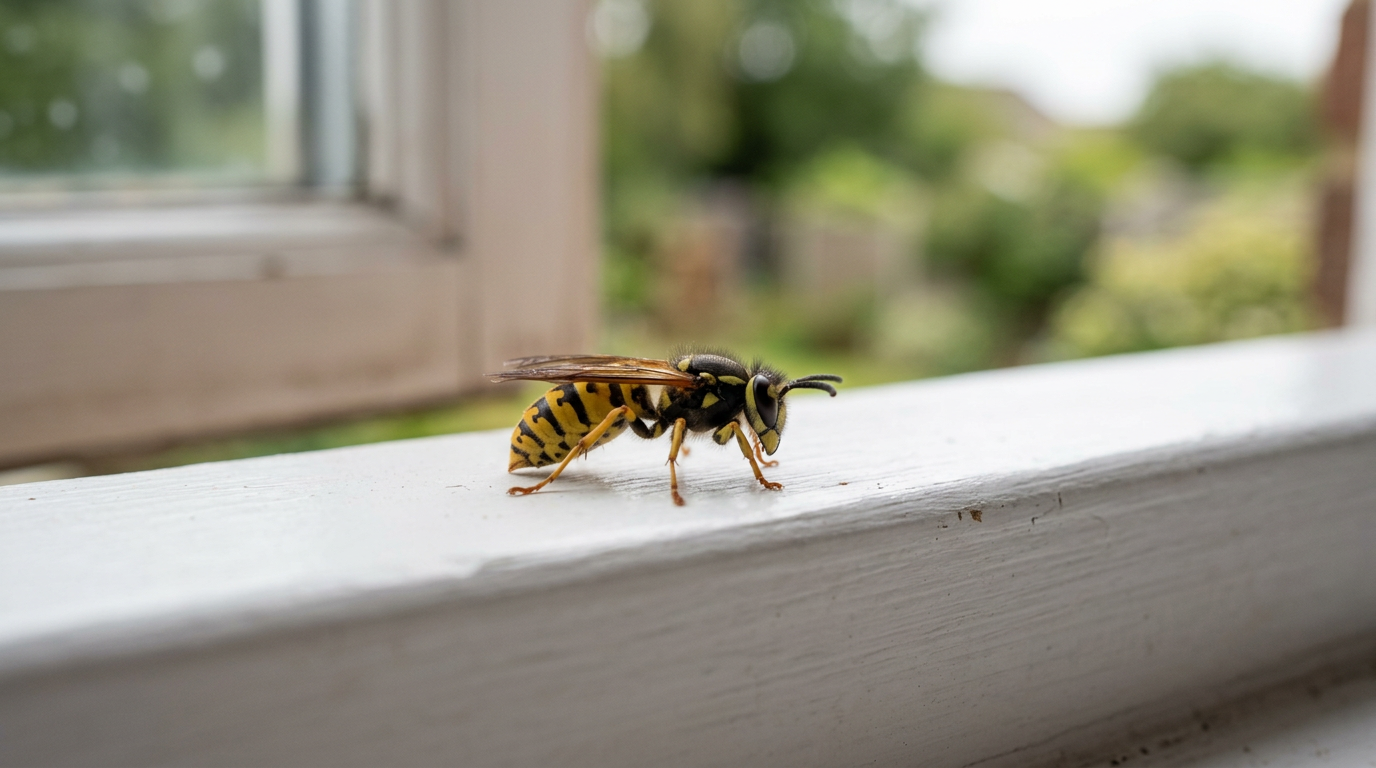
How do wasps get into your house?
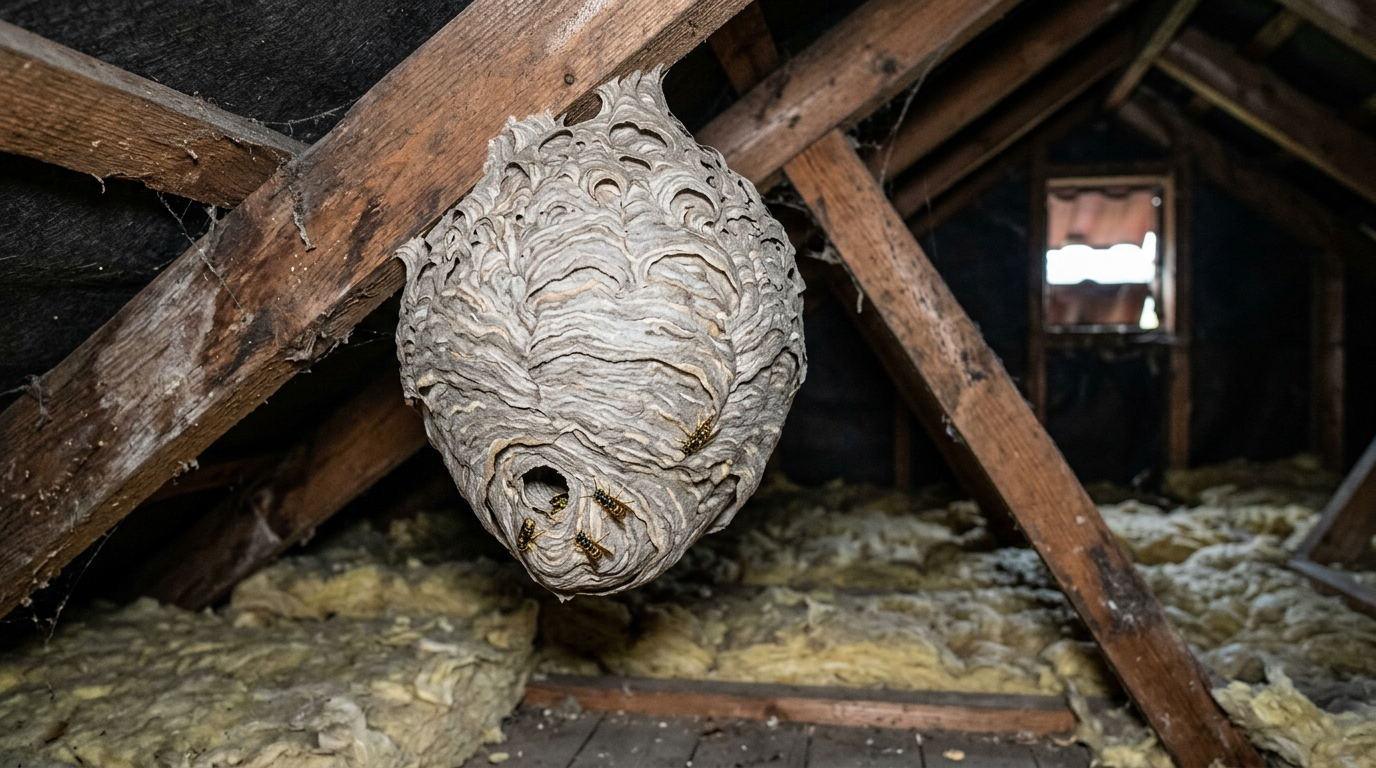
Wasps build new nests each spring from scratch. A mated queen that has overwintered seeks out a sheltered void and begins building a small paper nest from chewed wood pulp. Common locations in and around UK homes include loft spaces, wall cavities, under roof tiles, in garden sheds, under decking, in airbricks, and in the ground (underground nests in old mouse burrows or soil banks are common).
A nest that starts in April with a single queen can contain 5,000 to 10,000 workers by August. Workers enter and leave through a single hole, and you will often notice a line of wasps hovering around a particular gap in brickwork, under a soffit, or in the ground before you locate the nest entrance. Wasps are not in the house itself unless the nest is located inside a wall cavity or ceiling void and they are finding a way through gaps or cracks into the living space.
If wasps are appearing inside a room without an obvious open window or door, look for a gap around a light fitting, a crack at the top of a wall, or a poorly sealed pipe entry through the ceiling. This usually means the nest is in the void above or beside that room.
What is the best product for wasps?
Insecticide dust is the professional's choice for wasp nest treatment and is significantly more effective than spray foam or aerosol sprays. The dust is puffed into the nest entrance using a hand bellows duster. Workers entering and leaving the nest carry the dust inside on their bodies, and it spreads rapidly through the colony and onto the nest structure itself. A single application is usually enough to kill the entire nest within 24 hours.
Look for a product containing permethrin in powder form. Some products are specifically formulated for wasp nest treatment and come in a puffer bottle that doubles as an applicator. Professional-grade products are now available to consumers and are far more reliable than aerosol foam sprays.
As an Amazon Associate I earn from qualifying purchases.
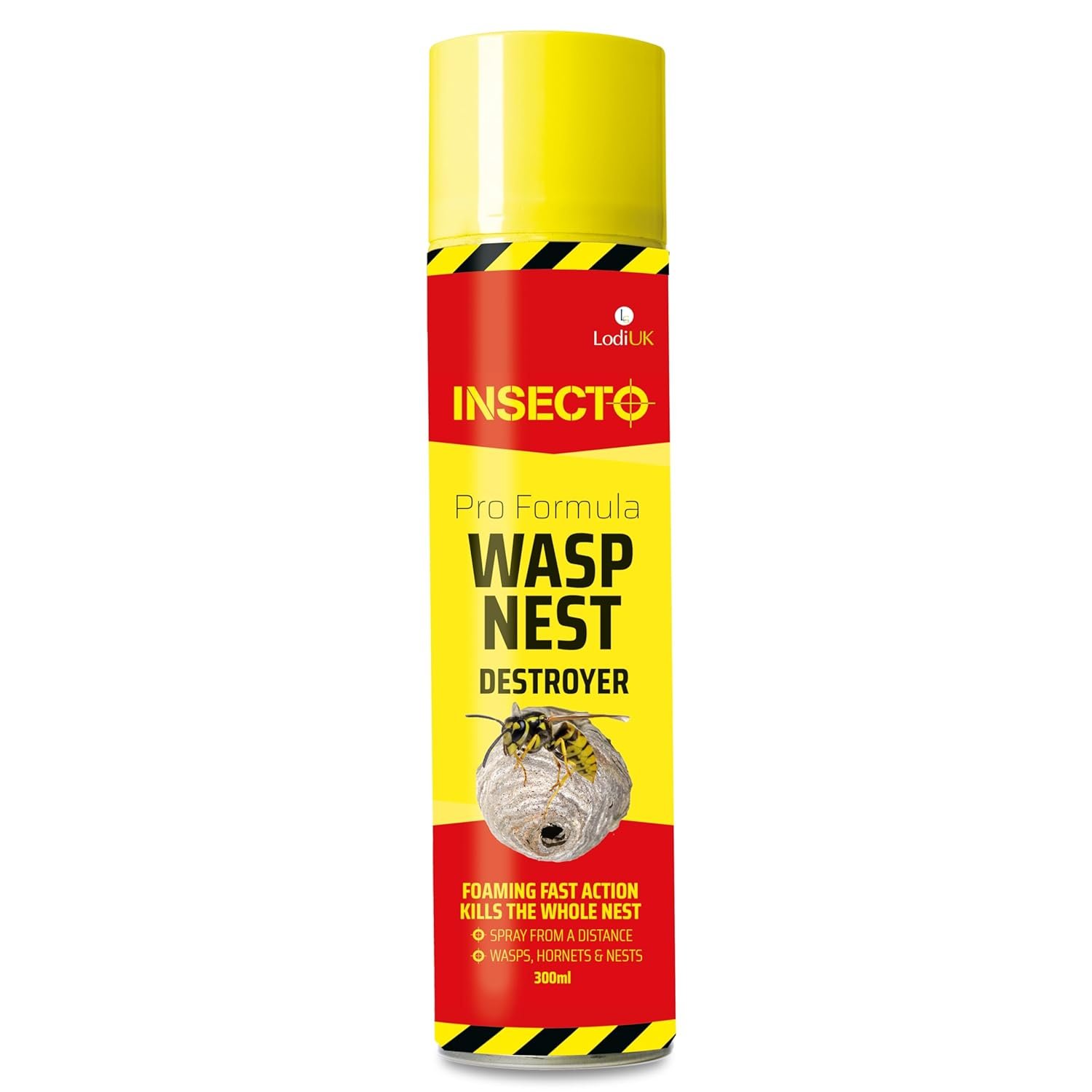
What to look for: a wasp nest destroyer foam. This is the one you use when you can actually see the nest, for example a nest hanging in a bush, in a shed, or out in the open under the eaves. The foam expands and coats the whole nest, soaking it and the wasps on it. It is NOT for squirting into a hole or a gap in the wall where you cannot see the nest. The foam only works while it is wet and sitting on the nest itself. Once it has dried it does nothing, so firing it into a cavity is a waste of time and just stirs the wasps up. Use it on a nest you can see, treat it at dusk when the wasps are home and calmer, and stand back as you spray. Always read the label before use.
Check price on AmazonAs an Amazon Associate I earn from qualifying purchases.
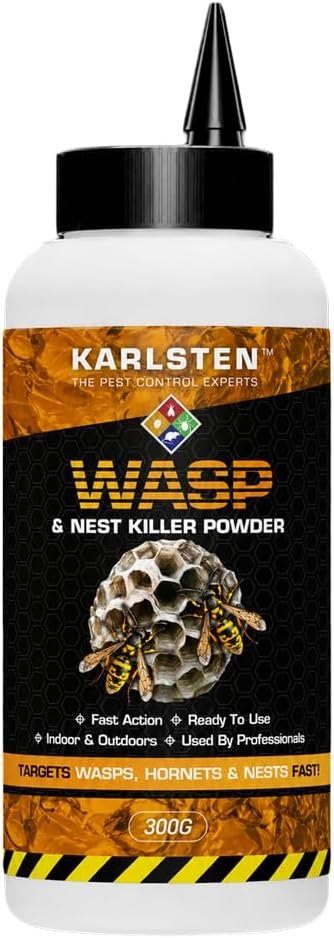
What to look for: an insecticidal wasp killer powder. This is the one for a nest you cannot see, where the wasps are going in and out of a hole, a gap under the tiles, an air vent, or a hole in the wall. You puff the powder at the entry point. The wasps walk through it as they come and go, carry it back inside on their bodies, and it works through the whole nest over a day or two. Do not block the hole, they need to keep walking through the powder. Treat at dusk when most of them are home, and put the powder right on the entrance and just inside it. Leave it alone afterwards, do not go back and poke it. Always read the label before use.
Check price on AmazonAs an Amazon Associate I earn from qualifying purchases.
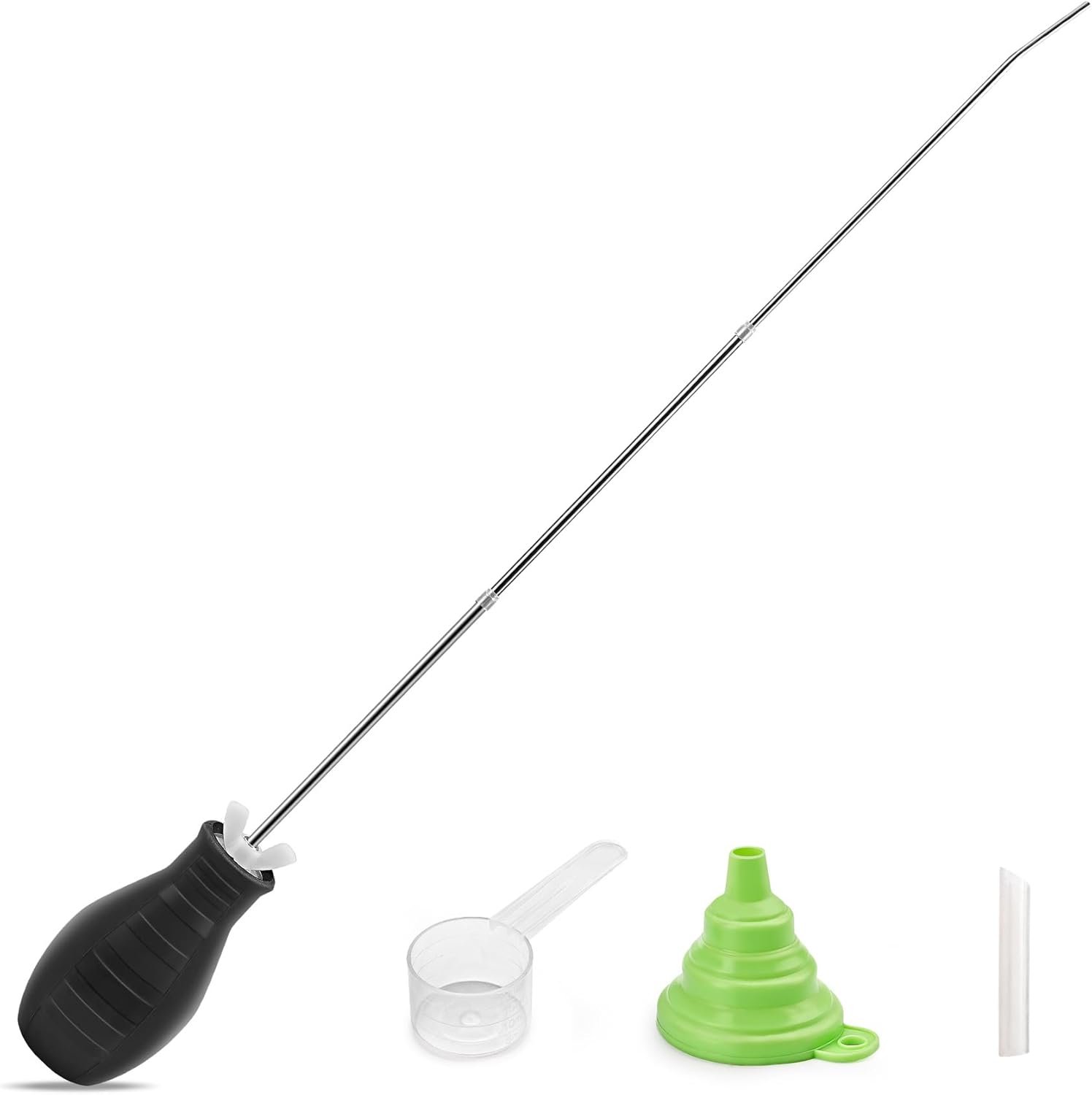
What I use: a powder duster. This is the tool that puffs the powder for you, and it lets you apply it from a safe distance rather than right up at the hole. With wasps, the further back you can stand, the better, so a duster with a bit of reach keeps you out of their way while you treat the entry point. Load it with the wasp powder, aim at the entrance, and give it a few puffs from as far back as the duster lets you. I would always advise using one of these over trying to apply powder by hand up close. If the nest is high up, hard to reach, or near where people pass, that is the point to stop and call a professional with the right kit.
Check price on AmazonWhat to avoid
Never block or seal the entrance to a wasp nest, either before or at the same time as treating it. Wasps that cannot exit will chew through in a different direction. In a wall cavity or loft, that direction is usually inward, into the living space. I have attended jobs where someone has blocked the entrance and a ceiling has come down with thousands of wasps behind it. Treat first, seal later once all activity has stopped.
During the day, forager wasps are actively flying in and out of the nest. Approaching the entrance in daylight with no protective clothing on is how people get stung multiple times. Treat at dusk when foragers have returned and the wasps are calmer and less likely to defend aggressively.
Wasp traps catch individual workers but do nothing to the nest. If you have a nest with thousands of workers, a trap is irrelevant. Traps have a minor use for reducing nuisance wasps around a garden eating area in late summer, but they are not a nest treatment.
How to use it properly
Wait until dusk, when wasp activity at the entrance has slowed. Wear long sleeves, tuck trousers into socks, and wear gloves. Approach the nest entrance calmly and without sudden movements. Apply a generous puff of dust directly into the entrance hole. Step away immediately and do not block the entrance afterwards.
Over the next few hours, workers carry the dust inside. By the following morning, wasp activity will be significantly reduced. Within 24 to 48 hours the nest should be dead. If some activity remains after 48 hours, a second application is usually enough to finish it.
Once all activity has stopped, you can seal the entrance with filler or appropriate sealant to prevent other pests using the void. The nest itself does not need to be removed and will not be reused by wasps the following year.
When to call a professional
Call a pest controller if:
- You are allergic to wasp stings or have had a severe reaction in the past
- The nest is in a location you cannot safely access, such as a high roof space, inside a wall cavity, or underground beneath a structure
- The nest is very large and wasps are already entering the living space
- You have treated the nest but activity has continued beyond 72 hours
- There are multiple nests on the property
Wasp nest treatment is one of the most common jobs pest controllers do in summer. It is usually a quick, single-visit job and is worth paying for if there is any safety concern.
Frequently asked questions
Treat at dusk or just after dark. Foraging wasps have returned to the nest, the colony is at its fullest, and wasps are less active and aggressive in low light. Avoid treating in daylight when foragers are actively flying and defensive behaviour is highest.
No. The dead nest will dry out and shrink over winter and will not be reused. You can leave it in place. If it is in an accessible, visible location, you can remove it once all activity has completely stopped, usually after 48 hours.
No. Common wasps and German wasps are not a protected species in the UK. You are legally entitled to treat or destroy a wasp nest on your own property.
In late summer, wasps seek sweet food and drink, fallen fruit, and sugary residue on bins as their natural food supply declines. Keep bin lids on, clear fallen fruit promptly, and cover drinks when eating outside to reduce nuisance wasps around seating areas.
Not directly. Wasps build from chewed wood pulp and do not damage masonry or structural timber. However, a large nest in a wall cavity or loft can cause staining from moisture and may attract other pests once abandoned. It is best dealt with while still active.