To get rid of cockroaches, use a professional-grade insecticidal gel bait applied in small dots inside cracks, behind appliances, and under units where cockroaches harbour. Surface sprays are the wrong product because they repel cockroaches deeper into voids without killing the population. Gel bait is taken back to the harbouring sites where cockroaches spread it to each other. Combined with good hygiene to remove competing food sources, this approach works when sprays do not.
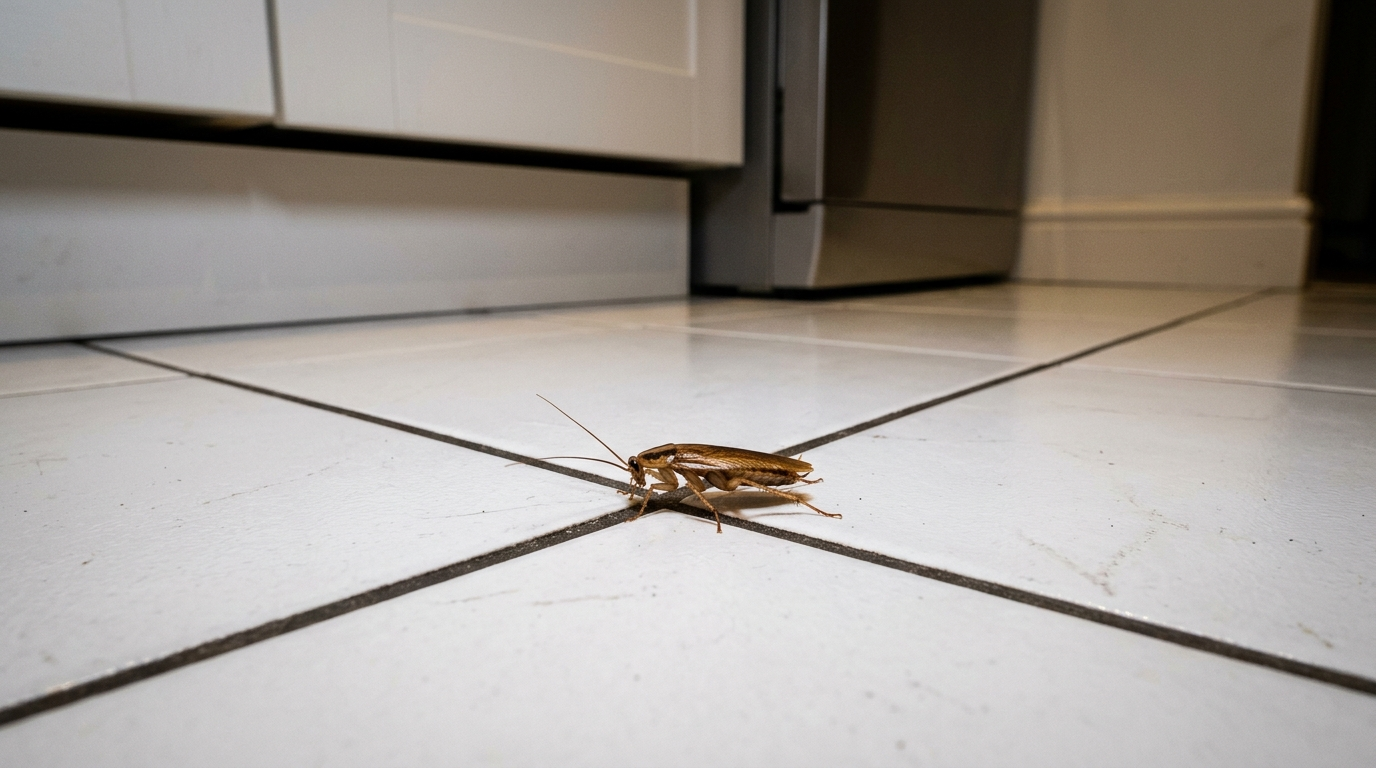
How do cockroaches get into your house?
Cockroaches in UK homes are most commonly introduced rather than wandering in from outside. They arrive in second-hand appliances, cardboard boxes from food deliveries or warehouses, grocery bags from infested shops or warehouses, and in furniture. German cockroaches, the most common domestic species, do not survive well outdoors in the UK climate. They travel in goods.
In flats and terraced properties they also spread between units through shared wall cavities, ducting, and drainage runs. If a neighbour has a cockroach problem, you may develop one without any obvious route of introduction. Oriental cockroaches are more commonly found in drains, basements, and subfloor spaces, and can enter through drainage connections.
Once established, cockroaches harbour in warm, dark, narrow spaces close to food and water. Behind the motor of a fridge, inside the void under a dishwasher, in the gap behind the kick board under kitchen units, behind loose wallpaper, and inside electrical consumer units are all common harbouring sites.
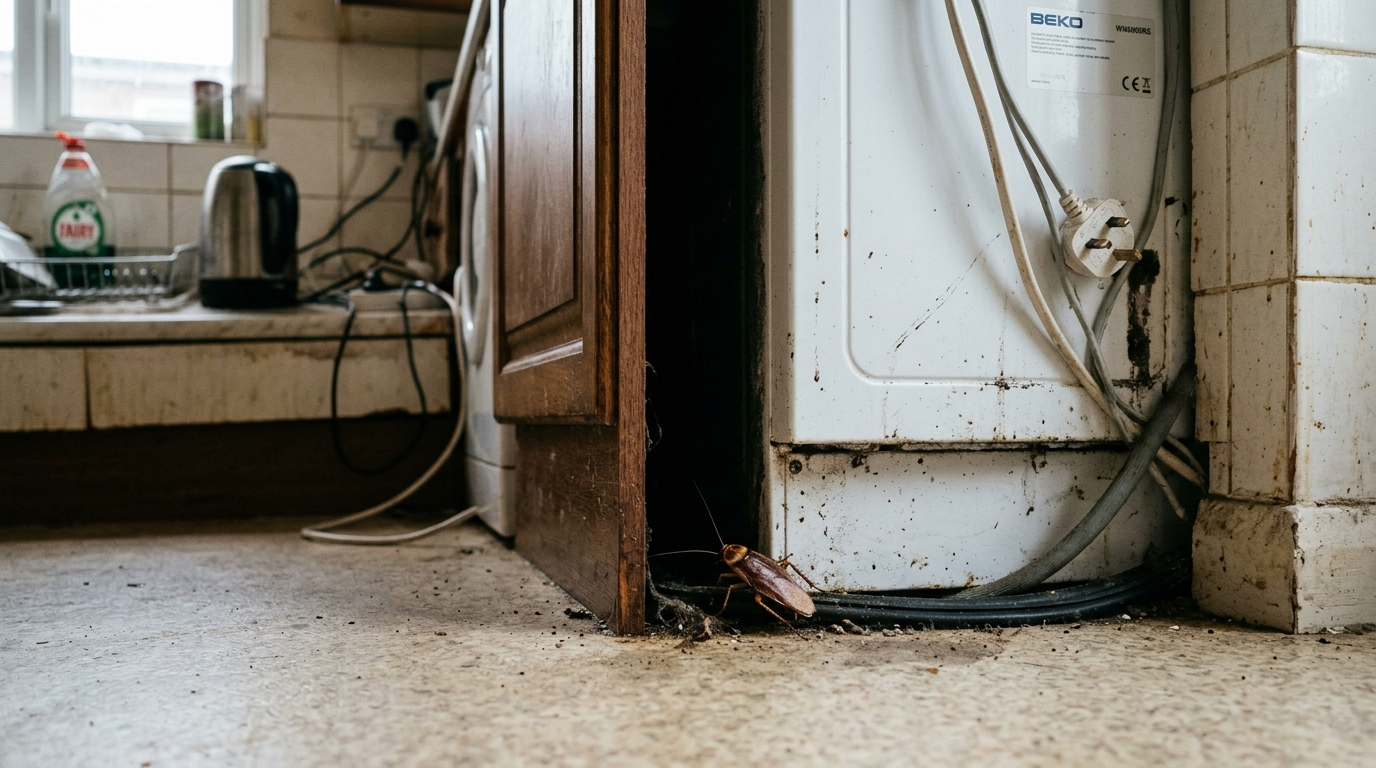
What is the best product for cockroaches?
Professional insecticidal gel bait is the most effective consumer product available for cockroaches. It contains a food attractant alongside a slow-acting insecticide, typically indoxacarb or fipronil. Cockroaches eat the gel and return to their harbourage, where the insecticide is transferred to others through contact and through the consumption of dead cockroaches (cockroaches are cannibalistic). This cascade effect kills individuals that never directly contacted the gel.
Apply the gel in small dots, around the size of a grain of rice, in as many locations as possible inside cupboards, behind appliances, and in any crack or crevice where you have seen activity or droppings. The more application points, the better the coverage.
As an Amazon Associate I earn from qualifying purchases.
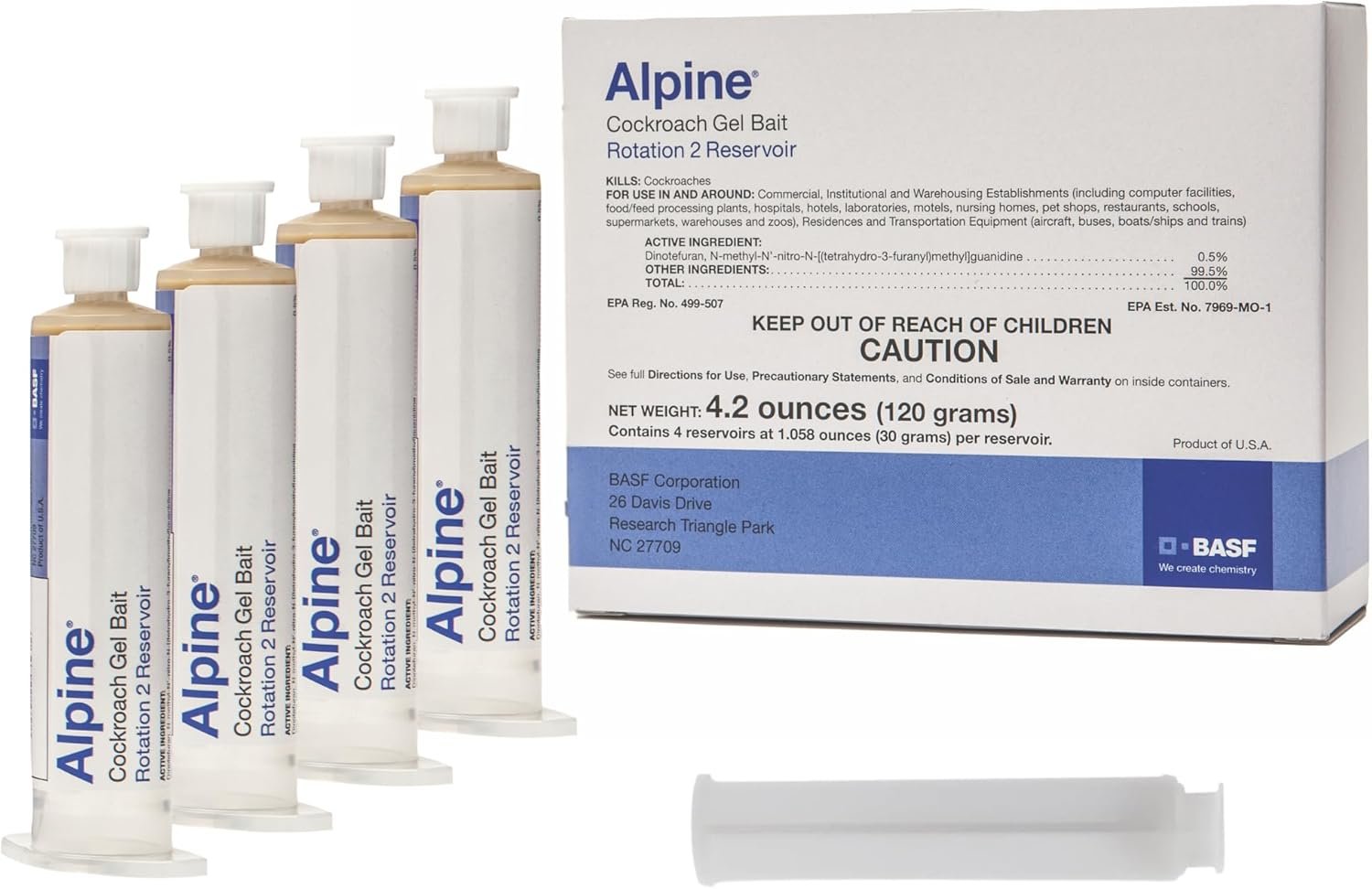
What to look for: a professional cockroach gel bait with dinotefuran as the active ingredient, supplied in a syringe applicator for accurate placement.
This is the type of gel bait used for treating cockroaches in cracks, cupboard hinges, pipe gaps, kickboards, and other hidden harbourage points.
Avoid cheap cockroach traps, repellent gels, or bait stations that do not clearly list the active ingredient. A proper gel bait should draw cockroaches in, not push them away.
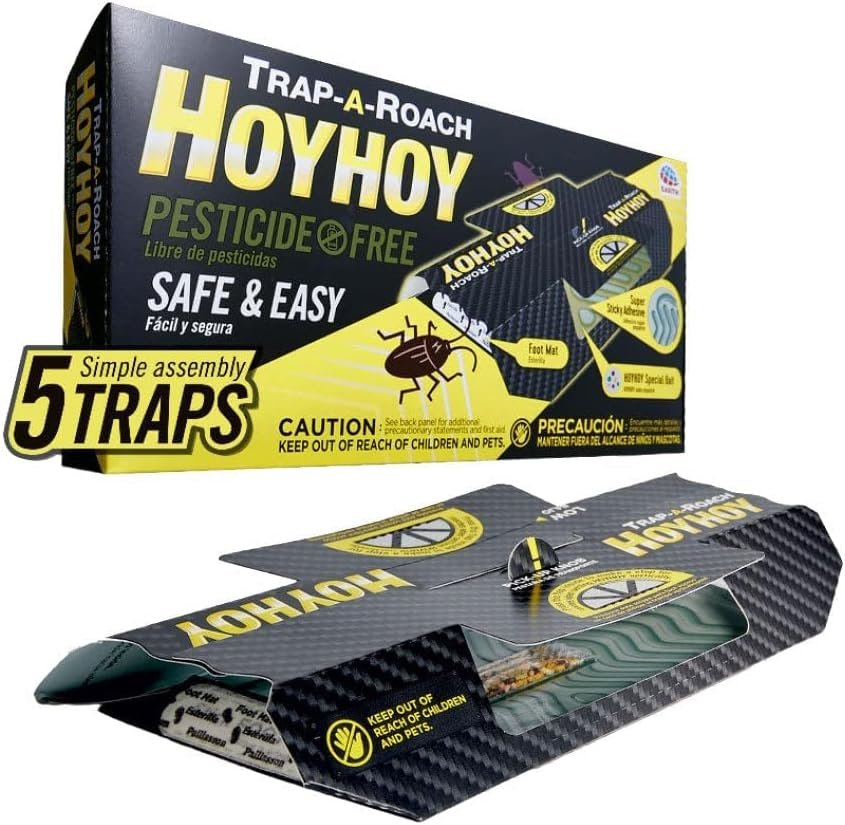
What I use: sticky cockroach monitor traps. These are the flat sticky traps the professionals put down first, before any treatment. They do two jobs. They show you where the cockroaches are travelling and how bad the problem is, and they catch a fair few in the process. Place them tight against walls, in corners, under the sink, behind the fridge and cooker, and anywhere you have seen droppings. Leave them down and check them every few days. They tell you where to aim your gel bait, and later they tell you whether the treatment is working.
Check price on AmazonAs an Amazon Associate I earn from qualifying purchases.
What to avoid
This is the most common mistake. Surface sprays contain repellent chemicals. When you spray a cockroach or a surface they are crossing, you do not kill the population. You drive them further into voids and cracks where the spray cannot reach. The infestation becomes more dispersed and harder to treat. Do not spray if you are using gel bait.
Total release foggers are largely ineffective for cockroaches. The insecticide does not penetrate into the voids and cracks where cockroaches harbour, and the repellent effect drives them away from treated areas temporarily rather than eliminating them. Professional operators rarely use foggers for cockroaches for exactly this reason.
Cleaning with bleach or antibacterial spray near gel bait points removes the bait and deters cockroaches from the treated area. Do not clean treated surfaces for at least a week. Keep food stored in sealed containers and remove grease from cooking surfaces, but leave the bait points alone.
How to use it properly
Start with the sticky monitor traps, before you put any gel down. Set traps like Hoy Hoy tight against walls and in corners, under the sink, behind the fridge and cooker, and in warm damp places, because cockroaches run the edges. Leave them a few days and see which traps fill up fastest. That tells you exactly where the cockroaches are travelling and where they are worst, so you know precisely where to aim the gel. These are glue traps with a non-toxic food bait in the middle, no pesticide, so they are safe around children and pets. The foot mat at each end cleans grease off the cockroach's legs on the way in, so the glue holds and it cannot get back out. Once you know the hot spots, apply your gel there. Keep the traps down through the treatment too, because fewer cockroaches caught each week tells you the gel is working. Replace a trap when it is full or after about a month, and move one to a fresh spot if it stops catching.
Before applying gel, remove as much competing food source as possible. Clean grease from around the cooker, store food in sealed containers, and fix any leaking taps or pipes (cockroaches need water). Then apply gel in as many locations as you can reach, focusing on warm areas close to food and water.
Expect to see cockroaches in the open during the first few days of treatment. This is normal. Dying individuals become disoriented and leave their harbourage. It is a sign the product is working, not a sign that the infestation is getting worse.
Replace gel after about two weeks or when it dries out. A moderate infestation should show significant reduction within three to four weeks. A heavy infestation may require multiple rounds of treatment and professional involvement.
When to call a professional
Cockroaches are one of the pests where professional treatment is often more effective, and sometimes the only realistic option. Call a pest controller if:
- The infestation is heavy (you see cockroaches regularly in daylight or in multiple rooms)
- Gel bait has been in place for three weeks with no reduction
- The property is a food business (cockroach control in food premises has a legal dimension under food hygiene regulations)
- Activity is in drainage or subfloor spaces that are inaccessible
- You are in a flat and suspect the infestation is coming from a neighbouring property
Frequently asked questions
Almost certainly yes. Cockroaches are nocturnal and hide during the day. If you see one in daylight or in an open area, the harbouring spaces are overcrowded, meaning there are many more out of sight. Act immediately rather than waiting to see more.
The German cockroach is the most common species in UK kitchens. It is small, around 12 to 15mm, and brown with two dark stripes. The Oriental cockroach is larger, darker, and more commonly found in drains and basement areas.
Yes. Cockroaches need very little food and will eat grease residue, paper, and food packaging. Hygiene reduces attractants but a clean home is not immune, particularly in flats with shared drainage or cavities.
Extremely fast. A female German cockroach produces an egg case every three to four weeks, each containing up to 40 eggs. A small infestation can become a serious one within two to three months if untreated. Early action matters.
Yes. Cockroaches carry bacteria including Salmonella and E. coli on their bodies and in their droppings, contaminating food and surfaces. Their droppings and shed skins are also a significant allergen that can trigger or worsen asthma.