To get rid of flies properly, you need to find and remove the breeding source, reduce entry with a fly door chain or fly curtain over open doorways, and kill adults using an electric fly killer (EFK) or sticky fly papers. Fly spray kills individuals on contact but provides no lasting control. A persistent fly problem always has a source, whether that is uncovered waste, a blocked drain, a dead animal in the structure, or spoiling food. Identify and remove that source first, then deal with adults.
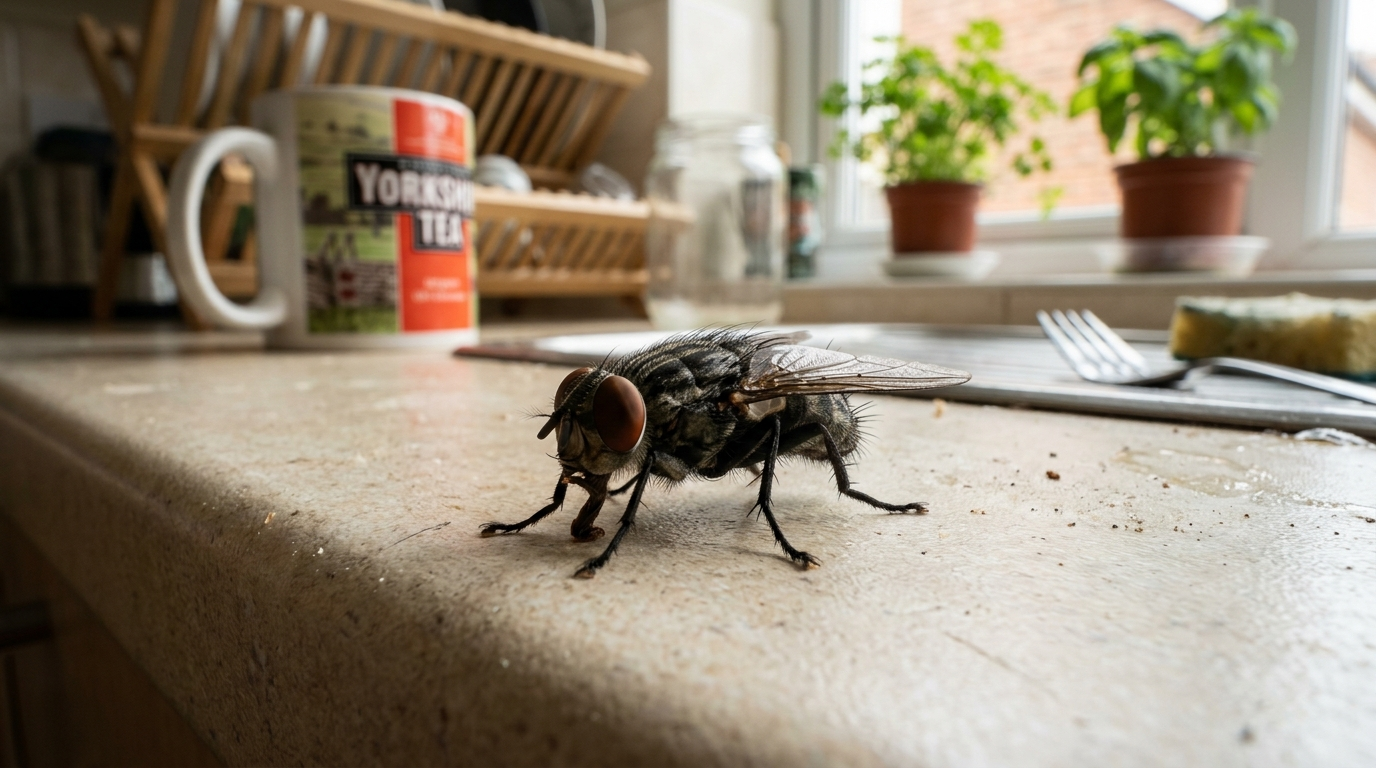
How do flies get into your house?
House flies enter through open windows and doors, gaps around window frames, and any other unprotected opening. They are attracted by the smell of food, waste, and warmth. In summer they can lay eggs and complete a life cycle from egg to adult in as little as seven to ten days in warm conditions, which is why a small number of flies can become a large problem very quickly if a breeding site is available inside or close to the property.
Fruit flies and drain flies are smaller species with different sources. Fruit flies breed in over-ripe or fermenting fruit and vegetable matter, including the residue inside recycling bins. Drain flies breed in the organic slime that builds up inside slow or partially blocked drains. If you have very small flies in your kitchen, these two sources are worth checking before assuming they are standard house flies.
A sudden large influx of blow flies (large, metallic blue or green flies) almost always indicates a dead animal in the loft, chimney, wall cavity, or subfloor. This is one of the more unpleasant discoveries in pest control but it is common, particularly following rat or mouse control work where a poisoned rodent has died in an inaccessible void.
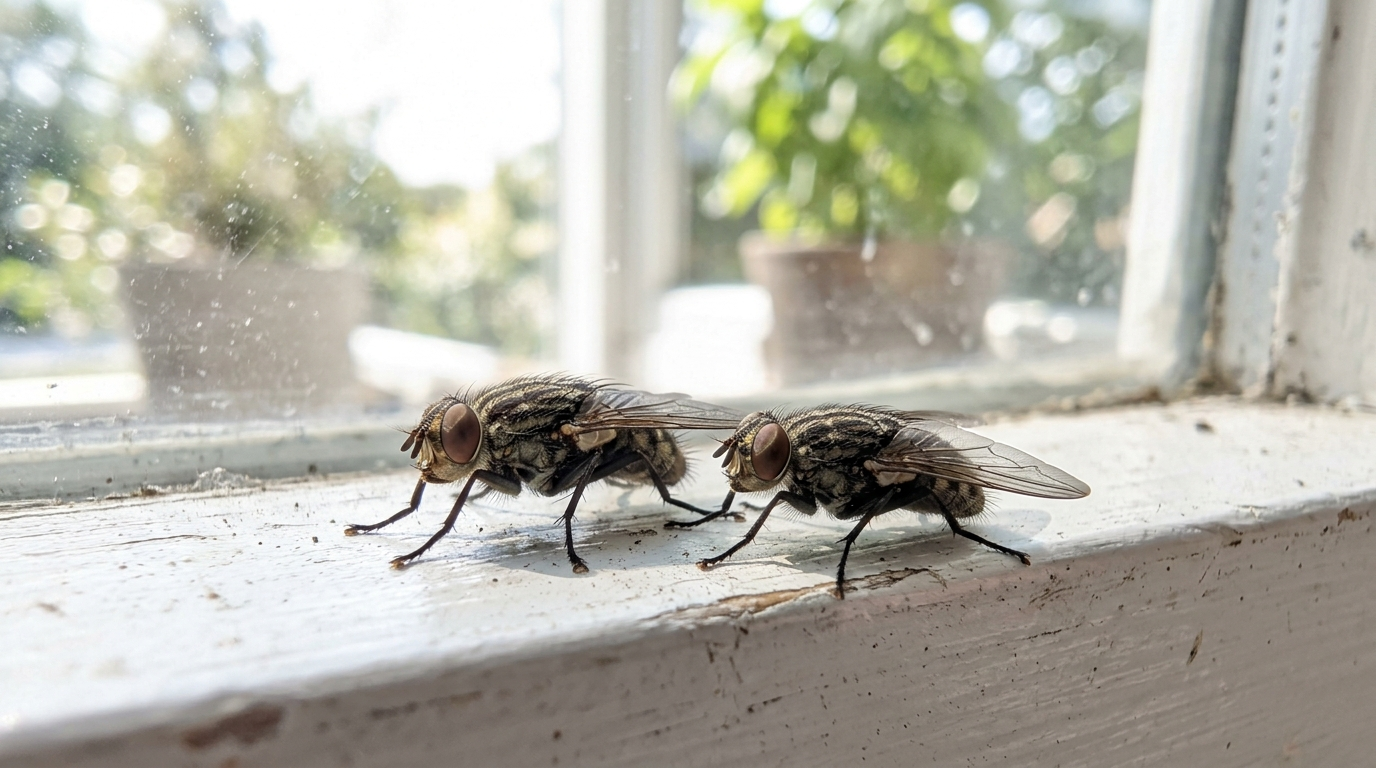
What is the best product for flies?
For a kitchen or food preparation area, an electric fly killer (EFK) is the most effective and hygienic permanent solution. These units attract flies using UV light and kill them on a glue board or electric grid. A unit with a glue board is preferable in food areas because the electric grid type can scatter fly fragments. Position the unit away from windows (so flies are attracted to the unit rather than past it) and at a height of 1.5 to 2 metres for best results.
As an Amazon Associate I earn from qualifying purchases.
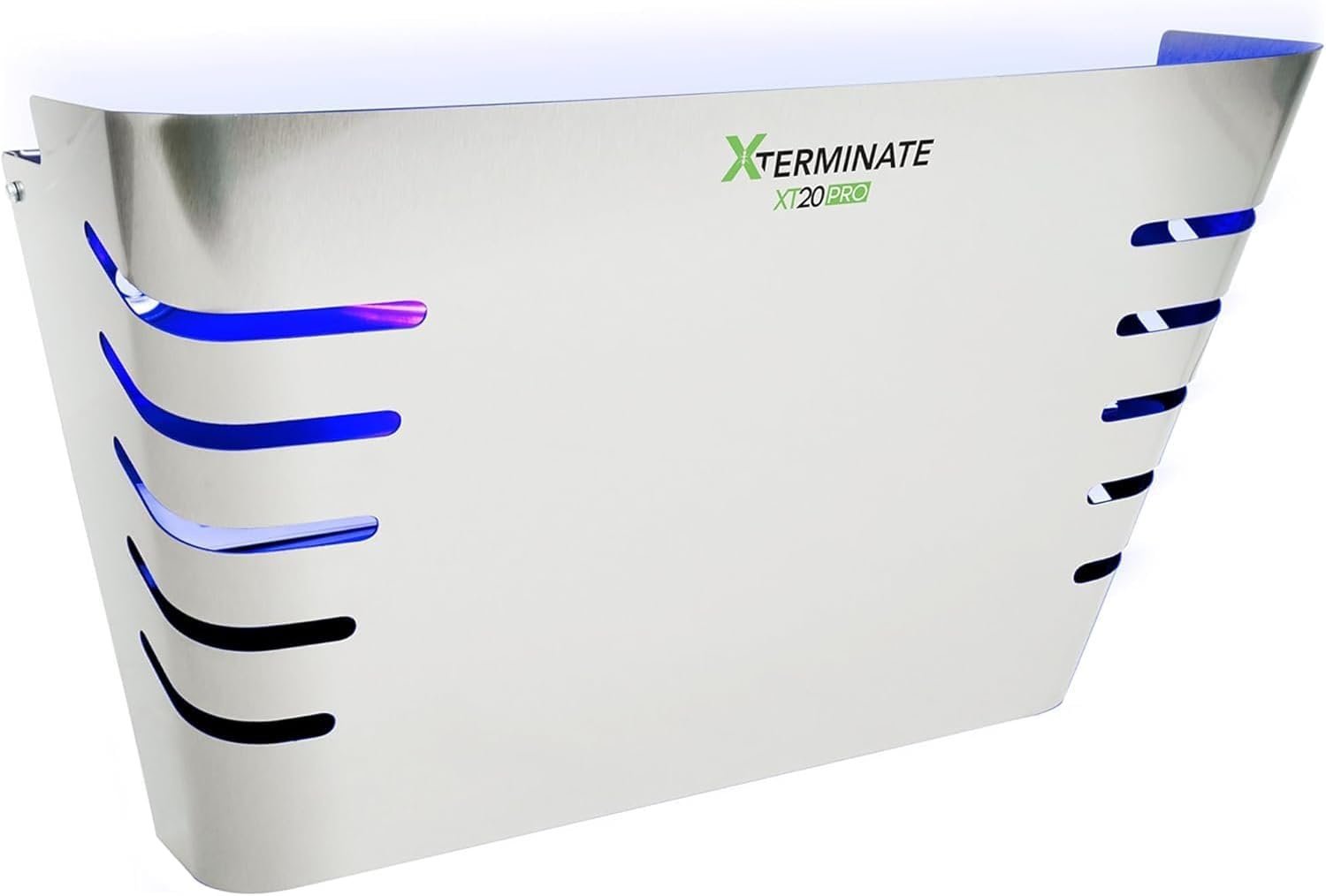
What to look for: a UV electric fly killer with a glue board capture system, rated for the size of room you need to cover. Units are rated in square metres. A domestic kitchen unit of 20 to 40 square metres coverage is right for most homes. Replace the glue boards every one to three months.
Check price on AmazonReplace UV tubes annually even if they still light up, as the UV output that attracts flies degrades before the visible light fails.
For doorways you like to keep open in summer, a fly door chain or fly curtain is the simplest physical barrier you can fit. They hang across the opening, break up the gap, and stop most flies walking or flying straight in without you having to keep the door shut.
As an Amazon Associate I earn from qualifying purchases.
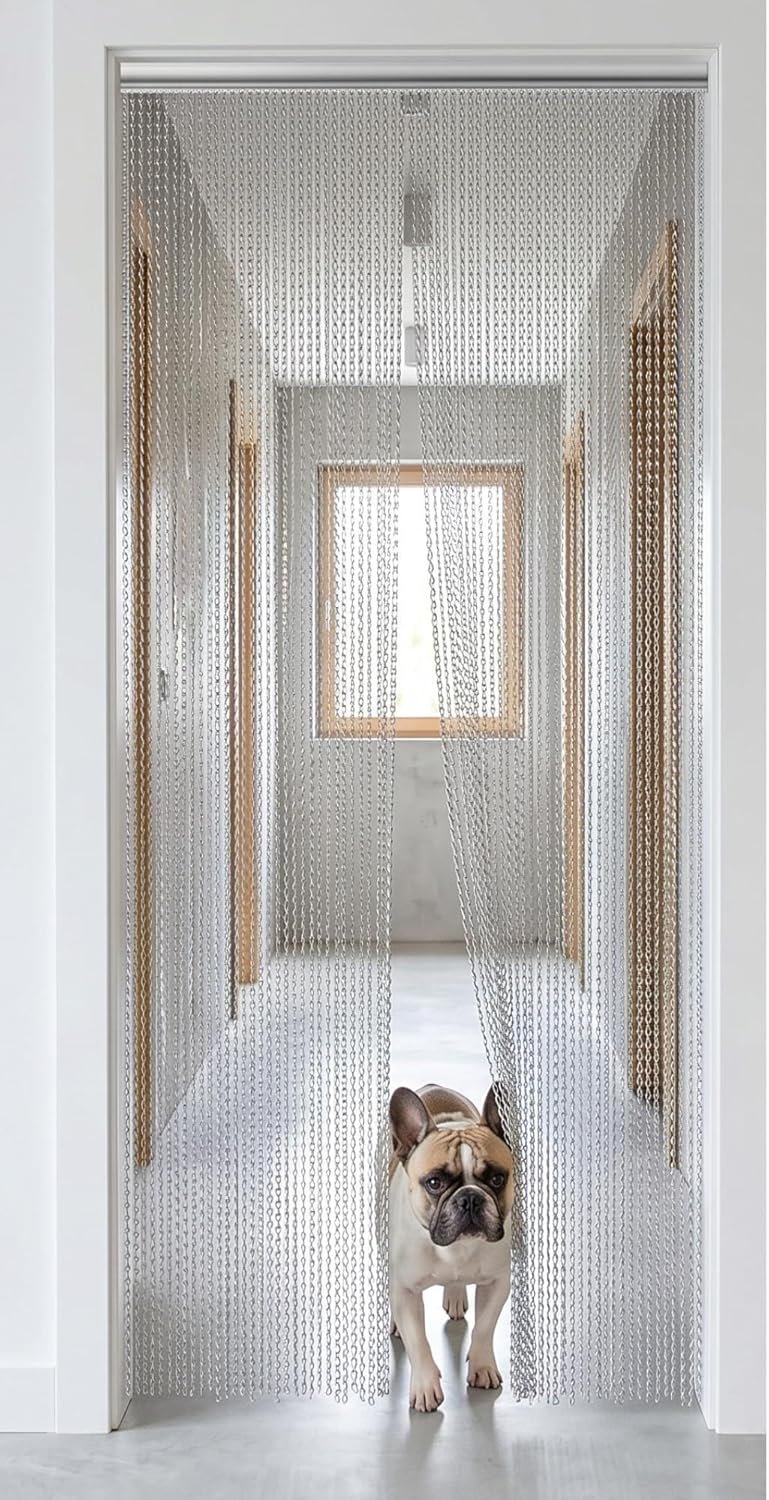
What to look for: a fly door chain or fly curtain. These are the strips or chains that hang down over an open doorway. You walk straight through them, but they break up the gap and stop most flies coming in, which is handy for back doors and kitchen doors you like to leave open in summer. They are cheap, they last, and there is nothing to plug in or refill. Fit one over the door you open most and you cut down a lot of the flies getting in before you have to kill anything.
Check price on AmazonWhat to avoid
Aerosol fly sprays kill adult flies on contact but have no residual effect and do nothing to prevent new flies entering or emerging from a breeding source. Using spray without addressing the source is like trying to empty a bathtub with a teaspoon while the tap is running. Use spray to knock down a sudden influx, but always look for the underlying cause.
If you have small flies appearing from around kitchen or bathroom drains, the breeding source is the organic matter inside the drain, not food left out. Pouring boiling water or a biological drain cleaner down the drain weekly will break down the slime layer they breed in. A fly spray will not fix this.
How to use it properly
Start by identifying and removing the breeding source. Check bins are covered and emptied regularly, compost bins are properly sealed, no food is left uncovered, and drains are clear and clean. If blow flies are present in large numbers, check the loft, chimney, and any accessible voids for a dead animal. Remove it if found and apply a residual spray to the area.
Fit an EFK unit in the kitchen and replace the glue boards monthly in summer. Hang a fly door chain or fly curtain over any door you leave open in warm weather to reduce the number getting in. For a fruit fly problem specifically, remove all over-ripe fruit, clean the insides of recycling bins with hot water and disinfectant, and check for any forgotten vegetable matter at the back of kitchen drawers or cupboards.
When to call a professional
Call a pest controller if:
- You suspect a dead animal in a wall cavity or void that you cannot access to remove
- A fly problem is severe and persistent despite removing all obvious breeding sources
- The property is a food business where a persistent fly problem has hygiene and regulatory implications
- Cluster flies in a loft are present in very large numbers and require treatment of the void
Frequently asked questions
A sudden large number almost always means there is a breeding source nearby. Common causes are a dead animal in the structure, uncovered food waste, a blocked drain, or a full bin close to an open window. Find and remove the source first.
House flies breed in decaying matter and peak in summer. Cluster flies are larger, slower, and enter loft spaces and wall voids in autumn to overwinter. They do not breed indoors. Cluster flies need loft treatment with a residual spray or smoke generator; house flies need a breeding source found and removed.
They kill individual flies on contact but provide no lasting control. Once the can is put down, new flies enter or hatch. Use spray to knock down a sudden influx, but it is not a solution to a persistent problem. Address the breeding source and use physical controls for sustained results.
Yes. House flies carry bacteria including Salmonella and E. coli from faeces and decaying matter onto food and surfaces. Flies in a kitchen are a genuine hygiene risk and not just an inconvenience.
Treat the loft space with a residual insecticide spray or an insecticide smoke generator in early autumn before numbers build up. Permethrin-based products work well. Seal gaps around eaves and roofline afterwards to reduce entry the following year.