To get rid of silverfish, you need to tackle two things at the same time: the moisture conditions that attract and sustain them, and the existing population with sticky traps and a residual insecticide spray. Reducing humidity in bathrooms and kitchens is the most important long-term step. Without it, you can kill every silverfish in the property today and they will be back within weeks as conditions remain ideal for them.
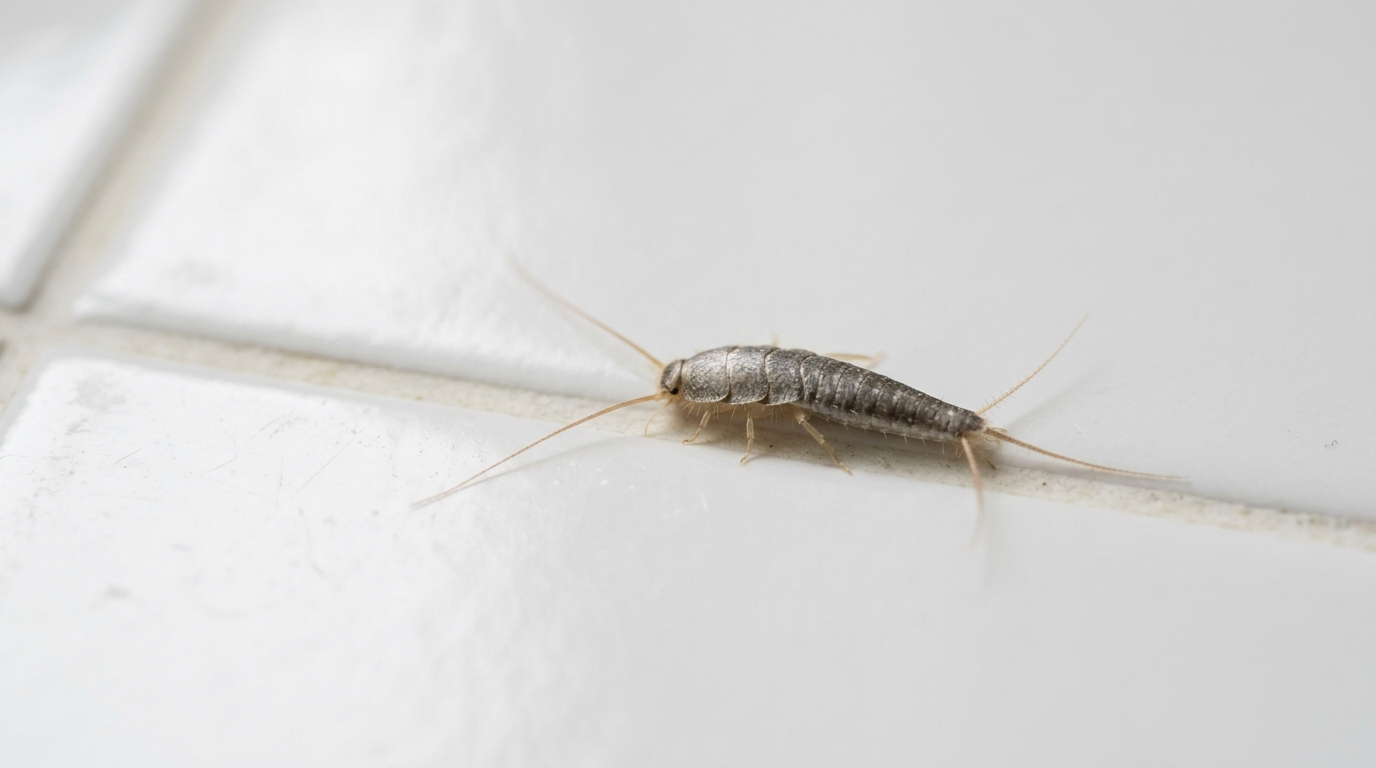
How do silverfish get into your house?
Silverfish are common in older UK housing and are often present at low levels without ever becoming a visible problem. They enter through gaps around pipework, under doors, through air bricks, and through any small crack or crevice at ground level. They are attracted by humidity and feed on starchy materials, so kitchens, bathrooms, and rooms with lots of books or paper are their preferred areas.
They are nocturnal and fast-moving, so most people only see them when turning on a bathroom light at night. They do not fly and cannot climb smooth vertical surfaces, which is why they are sometimes found trapped in baths and sinks. A small number in an older property is not unusual. Regular sightings across multiple rooms, or damage to books, wallpaper, and fabric, indicate a more established population.
The conditions that encourage them to breed in large numbers are consistently high humidity (above 75 percent), warm temperatures, and a reliable food source of starches. Poor bathroom ventilation, slow condensation on cold walls, and leaking pipes behind tiling create exactly these conditions.
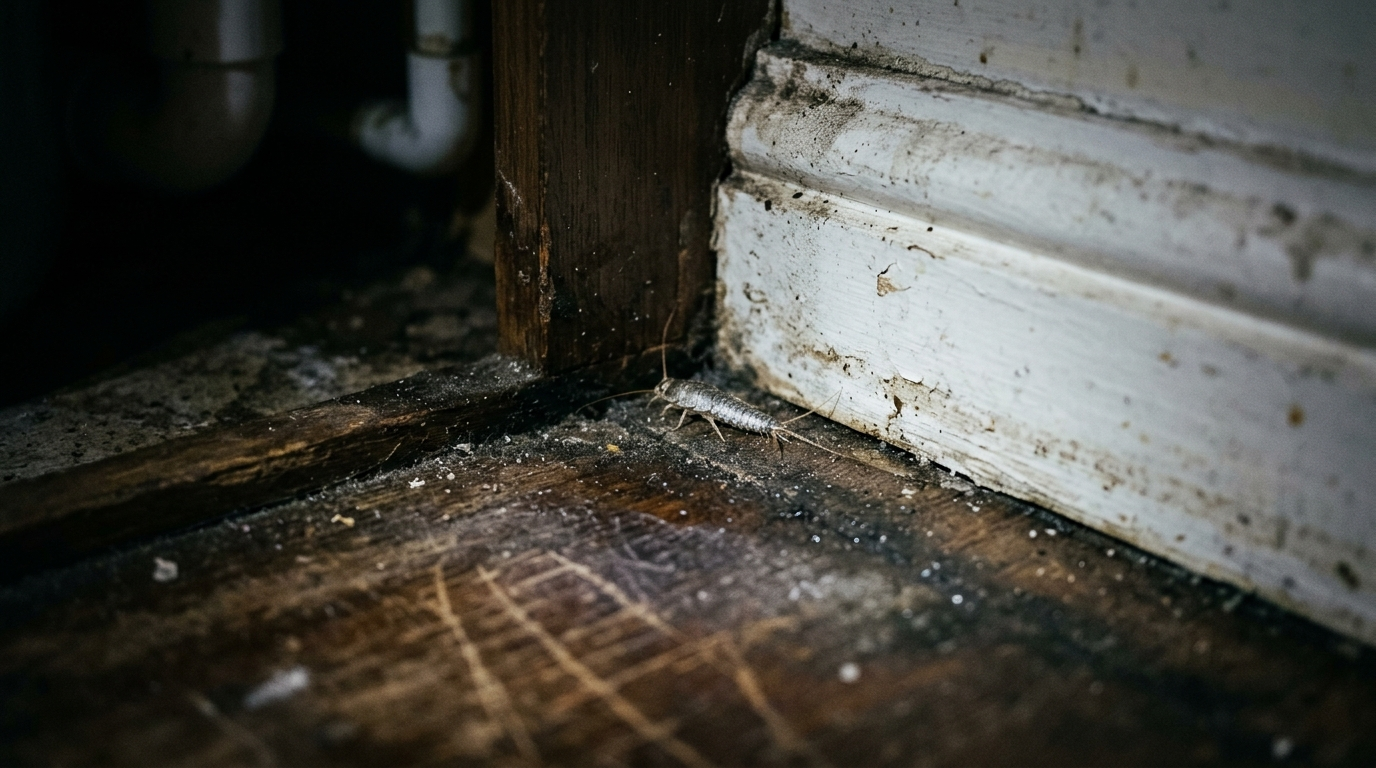
What is the best product for silverfish?
A combination approach works best. Sticky insect traps placed in affected areas monitor the scale of the problem and catch individuals without any chemical. A residual insecticide spray applied to the edges of rooms, inside cupboards, and around pipe entry points kills silverfish that walk across treated surfaces over a period of several weeks.
For the spray, look for a product containing cypermethrin or deltamethrin that is suitable for indoor use on hard surfaces. Apply it along the base of walls, the edges of shelving, inside bathroom cupboards, and behind the toilet and bath panel. Avoid spraying surfaces where food is prepared.
As an Amazon Associate I earn from qualifying purchases.
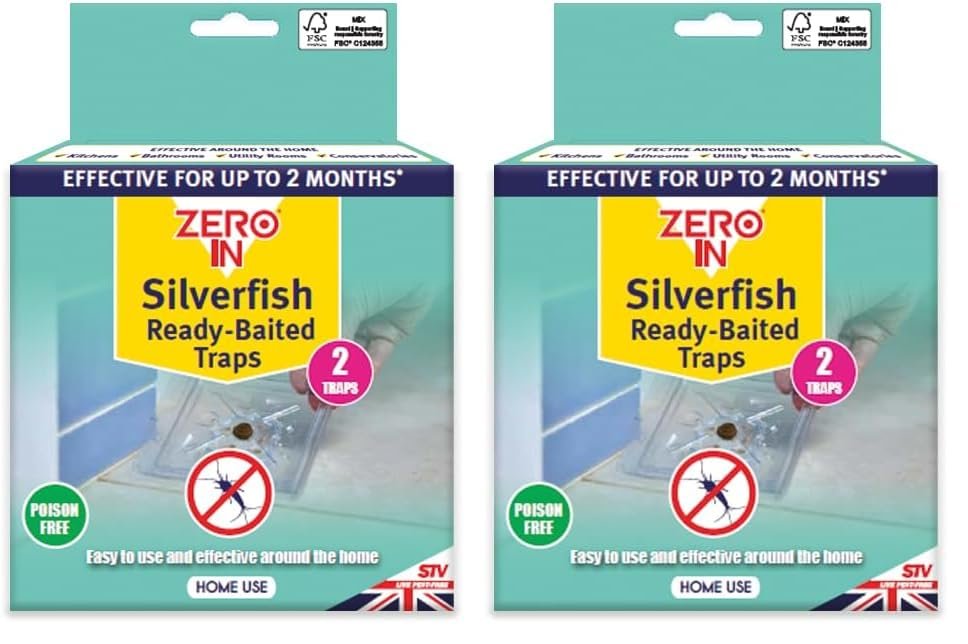
What to look for: silverfish sticky traps, which are flat cardboard monitors with a glue surface. Place them flat on the floor in corners of bathrooms and kitchens. Check weekly to assess numbers and whether they are reducing.
Check price on AmazonAs an Amazon Associate I earn from qualifying purchases.
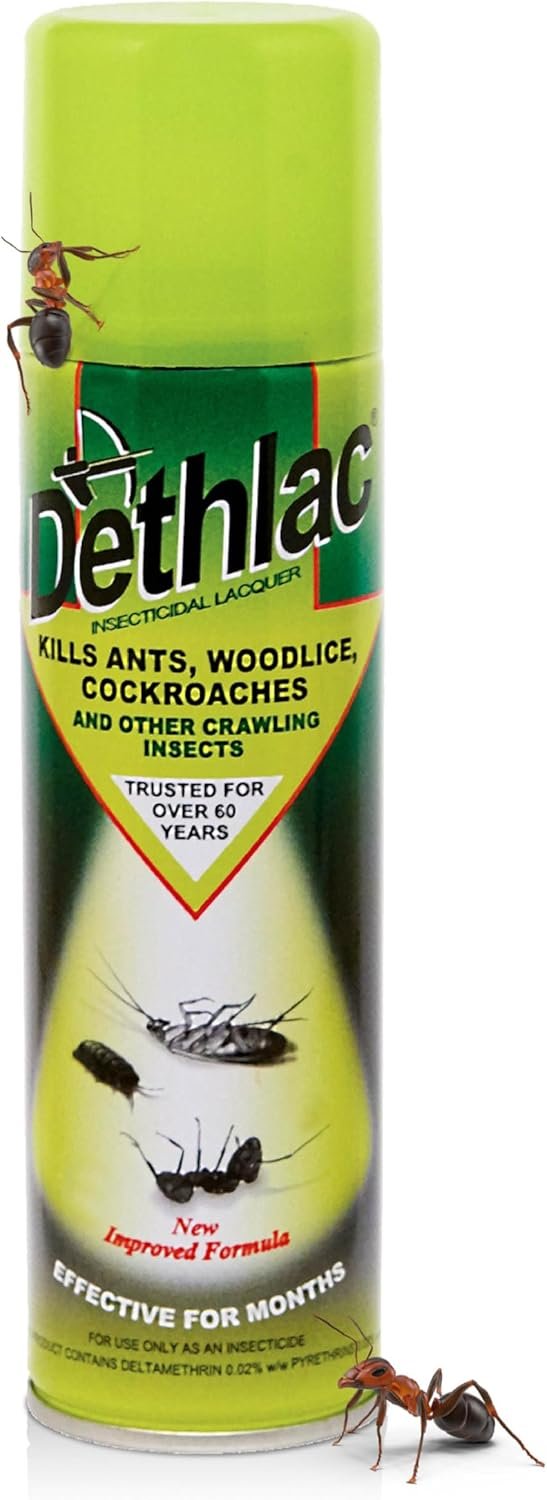
What to look for: Dethlac insecticidal lacquer spray. This dries to a clear, long-lasting film that keeps killing silverfish as they walk over it, so it is good for the cracks, gaps and edges where they run. Spray it along the back of cupboards, under the bath and sink, and into the gaps in skirting and tiling. Let it dry fully before the area is used. Keep it off food surfaces, and away from children and pets. Always read the label before use.
Check price on AmazonWhat to avoid
This is the fundamental mistake. A bathroom with no extractor fan, or one with poorly sealed tiles and persistent condensation, will keep drawing silverfish regardless of how many times it is sprayed. Fit or repair extractor fans, check for slow leaks behind tiling, and use a dehumidifier if condensation is a recurring problem in winter months.
Silverfish spend almost all of their time in narrow crevices, behind skirting boards, under bath panels, and inside wall voids. A fogger or general room spray does not penetrate these areas. A targeted residual spray applied directly to surfaces they travel across is far more effective than trying to fill the room with insecticide.
How to use it properly
Start by improving ventilation. Fit or service the extractor fan in the bathroom and ensure it runs for at least 15 minutes after a shower or bath. In kitchens, use the cooker hood when cooking and open windows where possible after washing. If a room has persistent condensation on walls, a small dehumidifier running regularly will make a significant difference to both moisture levels and silverfish numbers.
Place sticky traps in bathroom corners, under the sink, inside airing cupboards, and in any room where you have seen silverfish. Check them weekly. Apply residual spray along the base of walls and inside any cupboard where activity is high. Leave the spray to dry fully before the room is used normally. Repeat every four to six weeks for two to three months.
Seal cracks around pipework with silicone sealant, and replace any damaged grouting in bathrooms, which provides harbouring space. Store books and paper in sealed boxes in loft spaces and cupboards to remove a food source.
When to call a professional
Silverfish rarely require professional pest control. However, call a pest controller if:
- Population numbers remain high after two months of combined moisture control and chemical treatment
- There is widespread damage to books, documents, or wallpaper suggesting a very large population
- Silverfish are appearing throughout the property and moisture control measures have already been addressed
- You suspect there is a structural damp problem that is beyond standard DIY ventilation fixes
In most cases, improving ventilation and using a residual spray is enough. Silverfish are persistent but controllable.
Frequently asked questions
Silverfish do not bite and carry no known diseases. They are a nuisance pest that damages paper, books, wallpaper, and natural fabric. A large population indicates a persistent damp problem that is worth addressing for structural reasons beyond the insects themselves.
Silverfish thrive in high humidity. Bathrooms without adequate ventilation, leaking pipes, or condensation on cold walls create ideal conditions. Fixing the humidity issue is the most important step. Chemical treatment without addressing moisture produces only a temporary result.
No. Silverfish cannot survive in water and do not come from drains. They live in dry, dark crevices near damp areas. If you see them near a drain, they are coming from inside the wall cavity or under the floor, not through the drainage system.
Silverfish eat starches and sugars, including paper, book bindings, wallpaper paste, cotton fabric, dried food, and the glue on cardboard packaging. They can survive for months without food but need regular access to moisture to thrive.
Regular sightings, finding them in multiple rooms, yellow staining on paper or fabric, and tiny black pepper-like droppings in cupboards and drawers all indicate a larger population. Sticky traps placed in corners will give you a clearer picture of numbers within a week or two.