To get rid of fleas, you must treat both the pet and the home environment at the same time. Only about five percent of a flea infestation lives on the animal. The other 95 percent is eggs, larvae, and pupae in your carpets, upholstery, and soft furnishings. The product that makes the biggest difference is a household flea spray containing an insect growth regulator (IGR), which prevents flea larvae from developing into biting adults. Without it, you clear the adults and the eggs keep hatching for weeks.

How do fleas get into your house?
In almost every case, fleas enter a home on a cat or dog that has picked them up outdoors, from contact with other animals, from wildlife such as hedgehogs or foxes visiting the garden, or from infested premises visited during walks. A single flea on a pet can lay up to 50 eggs per day. Those eggs fall off the animal wherever it sits, sleeps, and moves, which means the flea population very quickly spreads throughout the entire home.
Fleas can also be introduced into a property when no pet is currently present. Eggs and pupae in carpets can remain dormant for many months. Moving into a previously occupied property that housed a pet, or returning home after a long absence, can trigger mass hatching as the vibration and carbon dioxide from activity stimulate development.
The most common harbouring areas are where the pet sleeps, along the edges of carpets next to skirtings, under sofa cushions, and inside upholstered furniture. These are the areas to focus your treatment on.
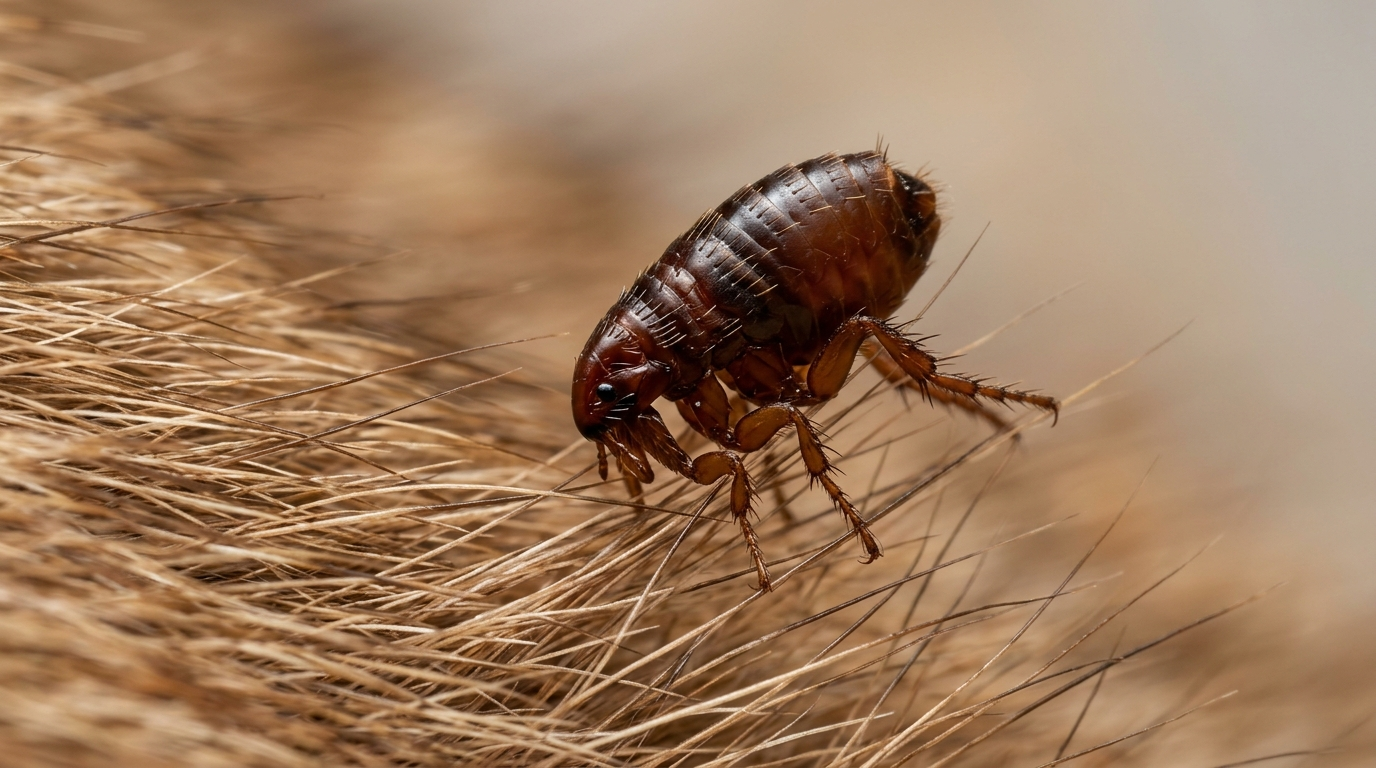
What is the best product for fleas?
The most effective household flea product contains both a contact insecticide to kill adult fleas and an insect growth regulator (IGR) such as pyriproxyfen. The IGR is the important part. It does not kill adults but it prevents flea eggs and larvae from developing into biting adults, breaking the breeding cycle. A single good application keeps working for up to 12 weeks, so the residue carries on doing its job long after you have sprayed the room.
The spray I recommend is Pest Expert Formula C+. It is water based, so you can apply it straight onto carpets and rugs without damaging them, and it is virtually odourless with no solvents. It contains cypermethrin alongside the IGR pyriproxyfen and natural pyrethrum. That combination is far stronger than basic pyrethroid-only sprays, which kill adults on contact but do nothing to stop the next generation hatching.
As an Amazon Associate I earn from qualifying purchases.
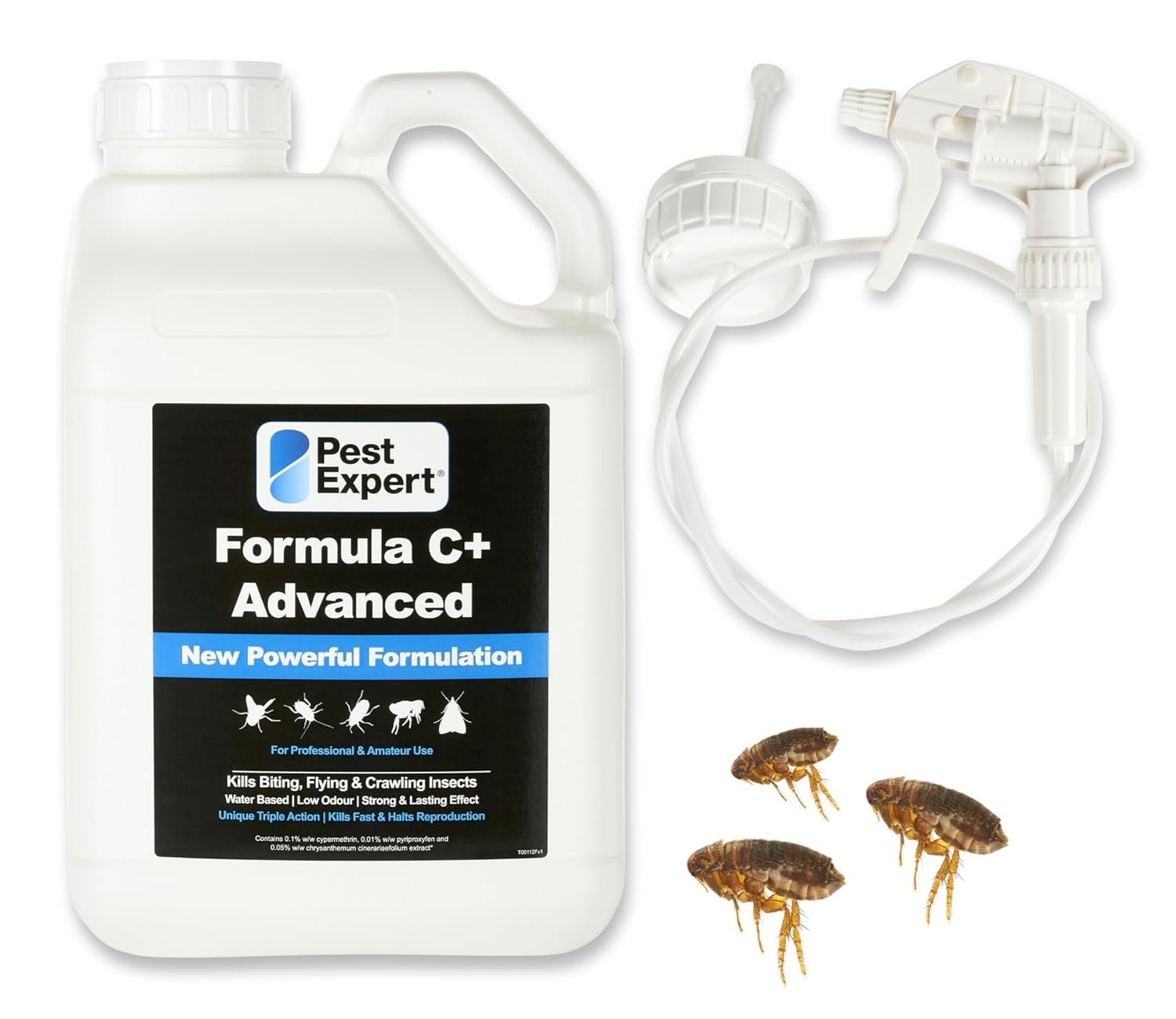
What to look for: Pest Expert Formula C+ flea spray. This is a strong, fast-acting spray for treating dog and cat fleas in the home. It is water based, so you can spray it straight onto carpets and rugs, and it is virtually odourless with no solvents. The bit that matters is what it leaves behind. The residue carries on killing fleas for up to 12 weeks after you spray, so it keeps working long after you have done the room. It contains cypermethrin to kill on contact, plus an insect growth regulator called pyriproxyfen that stops young fleas growing into adults, so they cannot breed and the cycle is broken. One good application is usually enough, though a heavy infestation or deeply set eggs may need a second go. Always read the label before use.
Check price on AmazonOne can typically covers an average three-bedroom home. Treat every room the pet has access to in a single session.
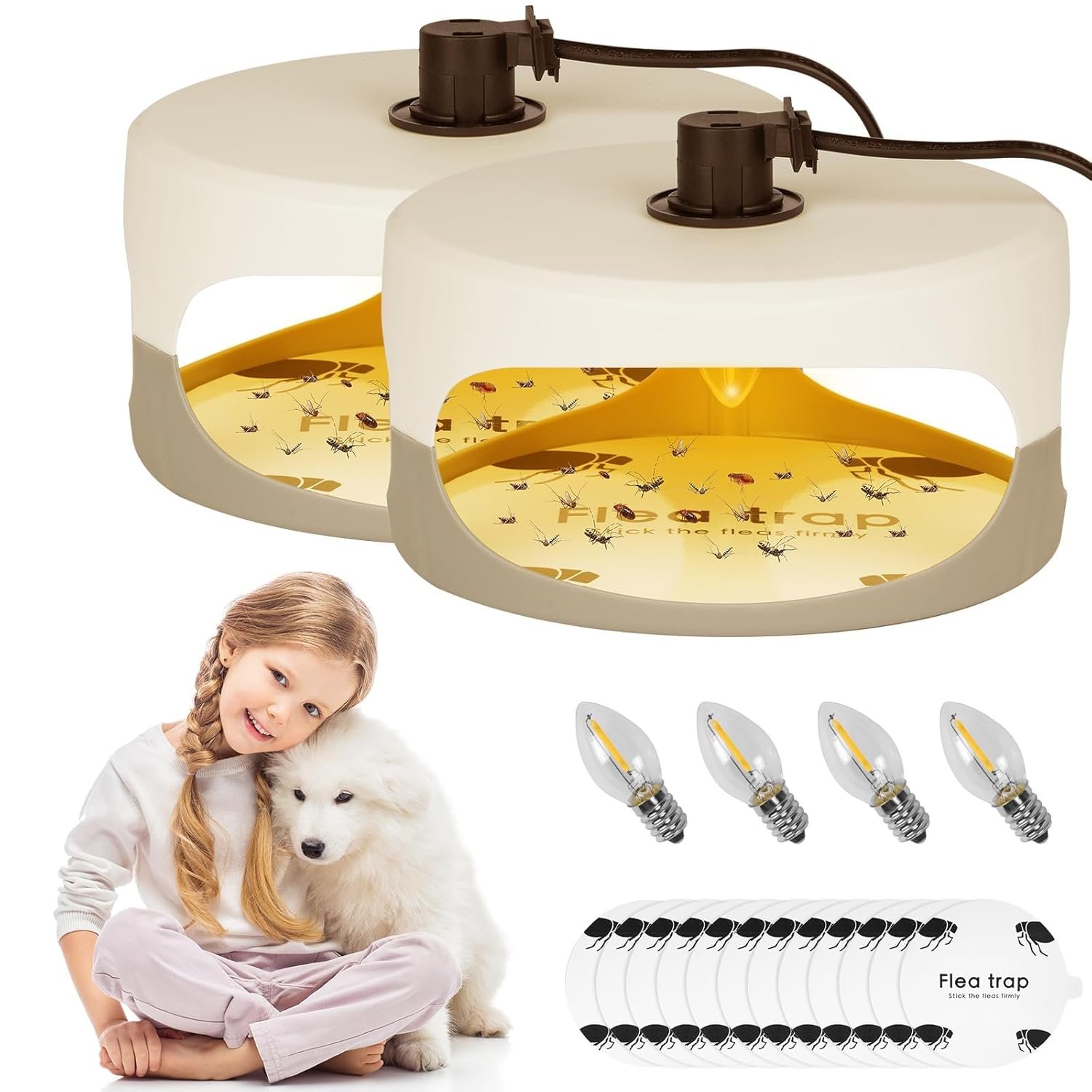
What I use: a flea trap. This is a plug-in trap that uses a small light, and often a little warmth, to draw fleas in at night. The fleas jump towards the light, land on a sticky pad, and get stuck fast. It will not clear an infestation on its own, but it catches a lot of the adult fleas jumping about in a room, and it shows you how bad the problem is and whether your treatment is working. Stand it on the floor in the room where you get bitten or where the pet sleeps, leave it on overnight with the lights off, and check the sticky pad every day or two. Replace the pad when it fills up.
Check price on AmazonAs an Amazon Associate I earn from qualifying purchases.
You also need to treat the pet itself on the same day as the home. Use a veterinary-recommended prescription-quality spot-on treatment or tablet, not a supermarket flea collar or spray. Your vet can advise on the right product for your animal's weight and species.
What to avoid
This is the single most common reason flea problems persist. The pet treatment kills the adults on the animal, but the eggs in the carpet keep hatching. Within days, newly emerged adults jump back onto the pet and the cycle restarts. You must treat the home and the pet on the same day.
Foggers do not penetrate into the base of carpets or under furniture where flea larvae live. The insecticide settles on the surface and the contact kill is superficial. More importantly, most fogger formulations do not contain an IGR, so even if they kill some adults, the eggs continue to develop. They are also a fire risk if used near pilot lights. I do not recommend them.
A spray that contains only a pyrethroid will kill adult fleas on contact but has no lasting effect on the egg and larval stages. You will see an initial reduction followed by a return of biting adults within a few weeks as the next generation hatches. Always check the label for an IGR.
How to use it properly
Treat the pet and the home on the same day, or the fleas just move between the two. Get flea treatment for the pet from your vet. Hoover the carpets, floors and along the skirting first, because the vibration brings fleas and eggs to the surface, then bin the hoover bag. Spray the carpets, rugs, skirting and the pet's bedding, paying most attention to where the pet sleeps. Keep children and pets out of the treated area until everything is dry, which takes about two to three hours. Once it is dry, try not to vacuum for as long as you can manage, because the residue left behind is what keeps killing fleas over the following weeks. For a heavy infestation, treat again after a couple of weeks to catch any newly hatched fleas.
A flea trap is a handy way to see what you are dealing with. It is a plug-in unit that uses a small light and a little warmth to draw fleas in at night. They jump towards the light, land on a sticky pad, and get stuck. It will not clear an infestation on its own, but it tells you how bad the problem is and whether your treatment is working. Once you have sprayed, a trap left running overnight should be catching fewer and fewer fleas each night. If it is, you are winning. Stand it on the floor in the room where you get bitten or where the pet sleeps, leave it on overnight with the lights off, and check the pad every day or two.
When to call a professional
Flea infestations are usually manageable without professional help if the right product is used correctly. Call a pest controller if:
- You have treated both the pet and the home and biting continues beyond six to eight weeks
- The property is a rental between tenancies and requires a documented pest-free record
- There is no pet in the property and you suspect the infestation was introduced by the previous occupants
- The infestation is severe and you need a faster result
Frequently asked questions
Yes. Flea eggs and larvae can remain dormant in carpets for months. When a new occupant or visitor enters a property that previously housed a pet, their movement and body heat triggers hatching. This is why people moving into a vacant home sometimes experience sudden biting with no obvious source.
With a household IGR spray and simultaneous pet treatment, adults are killed quickly. Eggs and pupae already in the environment can take four to eight weeks to hatch and then be killed. Expect some flea activity for several weeks after treatment. That is normal and does not mean treatment has failed.
Treat every room where the pet has access, including any upholstered furniture it uses and all carpets. Missing one room means surviving eggs hatch and the infestation continues from that area.
Modern prescription-quality flea collars can be effective for ongoing prevention. Cheap supermarket collars repel fleas from the neck area only and are not a solution to an established infestation. For treating an existing problem, use a vet-recommended spot-on or tablet alongside the household spray.
Because roughly 95 percent of a flea infestation is in the environment, not on the pet. Eggs, larvae, and pupae in carpets and furniture continue to develop and hatch for weeks after the pet is treated. You must also treat the home with an IGR spray on the same day.